

How Frozen Food is Shipped at Scale: Industry Solutions for Efficiency
You open the freezer. You grab a ready-to-eat meal or a steak. It is easy. But think about how that food got there. It traveled a long way. Maybe it went thousands of miles. But it stayed frozen the whole time.
Shipping frozen food is hard work for businesses. It is a race against time. If the ice melts, the food ruins. The business loses money.
You might be a small business owner. You want to know how to send frozen food in the mail to a customer. Or maybe you are a big distributor. You move giant containers of meat across the ocean. The rules are the same. You need good insulation. You need the right cooling. You need speed.
Experts meet every year to fix these problems. They go to SIAL China. This is the biggest food innovation show in Asia. They look at new tools that keep food cold.
In this guide, we will explain the process. We will look at how regular people send packages. We will also see how big companies ship huge amounts. We will talk about the new tech that helps everyone.
The Two Worlds of Shipping: Personal vs. Industrial
Moving cold things happens in two different ways.
The Consumer Level (How to Mail Frozen Food)
Maybe you bake cookies at home. You sell them online. Or you want to send a holiday meal to your family. You are looking for how to mail frozen food safely.
You don't have big refrigerated trucks. You have to make a tiny fridge inside a cardboard box. You use a few simple things:
- Styrofoam Coolers: These are light. They are cheap. They keep the cold air inside.
- Dry Ice: This is frozen carbon dioxide. It is much colder than normal ice. If you want to know how to send frozen food in the mail, this is the secret.
- Speed: You usually pay for overnight shipping. It costs more money. But it is the only safe way.
The Industrial Level (Shipping at Scale)
Now, think about shipping 10,000 steaks. You can't wrap each one in a cooler. That costs too much. It makes too much trash.
This is where "Cold Chain Logistics" starts. You see this at SIAL China. Big companies don't just pack the food. They control the whole room. They use:
- Reefer Containers: These are big shipping containers. They have air conditioning built in. They plug into a truck or ship.
- Pallet Blankets: These are huge covers. They go over a whole stack of boxes to keep them cold.
- Data Loggers: These are smart chips. They check the temperature all the time.
A small business asks how to ship frozen food in one box. The industry asks how to keep a whole warehouse cold.
The Science of Keeping It Cold
You need to understand heat to master shipping frozen food. Heat moves to cold places. Your job is simple. Stop the heat from touching your product.
Insulation is Your Best Friend
The box matters more than the ice. If the box is bad, the ice melts fast.
In the past, people used white Styrofoam. It works well. But it hurts the planet. At SIAL China, you can see new kinds of insulation.
- Biodegradable Foam: Companies make this from corn or mushrooms. It works like plastic. But it dissolves in water.
- VIPs (Vacuum Insulated Panels): These are thin panels. They work like a thermos. They cost a lot. But they are the best insulators. People use them for expensive beef or medicine.
Choosing the Right Coolant
When you learn how to ship frozen food, you have two main choices for cooling:
- Dry Ice: We mentioned this before. It is the king of cold. It stays at -109.3°F (-78.5°C). It is perfect for ice cream or meat. But some shipping companies call it a "hazardous material." You must label it right because it releases gas.
- Gel Packs: These are plastic bags. They have a special gel inside. They are great because they don't release gas. You can freeze them to different temperatures. They are safer for sending frozen food in the mail. But they might not stay frozen as long as dry ice.
Sourcing Solutions at SIAL China
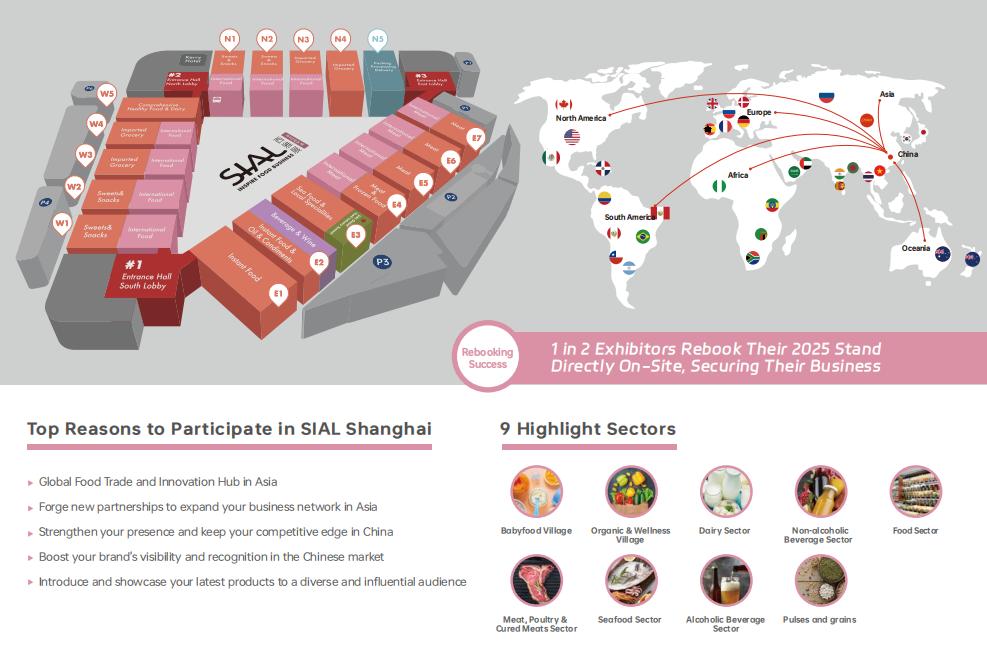
You want to see how the pros do it. Look at the map of SIAL Shanghai.
The map shows that SIAL Shanghai is huge. It covers 200,000 square meters. Look at the red and orange parts (Halls E4, E5, E6). You will see the "International Meat" and "Frozen Food" areas.
This is where the real work happens. You don't just find food in these halls. You find the whole system.
Meeting the Logistics Experts
You will find booths for shipping companies. They sit right next to the food sellers. These companies own fleets of freezer trucks. They know how to ship frozen food to other countries. They know how to get through customs.
You might make food. You can find a partner here. They will handle all your shipping frozen food tasks. You cook the food. They drive the trucks.
Packaging Innovation
You will also see the "Packaging" area. It is in Hall N5 on the map. You find machines here. They vacuum seal your food. Vacuum sealing is very important. It takes out the air. This stops freezer burn. It also makes the package smaller. Smaller packages are cheaper to ship.
Step-by-Step Guide: How to Ship Frozen Food
You are ready to send your first package. Here is a simple list to help you.
Step 1: Flash Freezing
Don't use a normal freezer. You need the food rock hard. Pros use "flash freezing." This freezes food instantly. Ice crystals don't form. The food stays fresh. If you want to know how to ship frozen food like a pro, buy a good freezer.
Step 2: Pre-Cool the Container
Here is a pro tip. Never put frozen food in a hot box. Keep your boxes in a cool room. If you use a cooler, put ice packs in it first. Do this an hour before you pack. This makes the box cold from the start.
Step 3: Pack It Tight
Air is bad. If there is empty space, warm air moves around. You must pack the box tight.
- Put ice or gel packs on the bottom.
- Put your food in the middle.
- Put more ice on top.
- Fill gaps with bubble wrap or paper.
Shake the box. Nothing should move. This is the main rule of how to mail frozen food.
Step 4: The Right Labels
You use dry ice? You need a specific sticker on the box. It warns the people handling it. Also, write "Perishable" and "Keep Frozen" on the box. The driver will see this. They won't leave it in the sun.
Step 5: Timing is Everything
Never ship on a Friday. The box might sit in a warm warehouse all weekend. Ship on Monday or Tuesday. The package has time to arrive before the weekend starts.
Common Mistakes When Shipping Frozen Food
Big companies make mistakes too. Avoid these common errors.
Skimping on Insulation
Some people want to save money. They use thin boxes. This is a bad plan. Shipping costs a lot. If the food melts, you have to pay the customer back. You also pay for shipping again. Pay a little more for a thick box. Do it right the first time.
Using Regular Ice
Never use normal water ice for shipping frozen food. It melts. It turns into water. The water leaks. It ruins the cardboard. It ruins other packages in the truck. Shipping companies hate this. They might throw your package away. Always use gel packs or dry ice.
Ignoring the Weather
You ship from a cold place to a hot place. Think about the heat. A box stays frozen in winter. It might melt in summer. Add more cooling packs in the hot months. The best companies check the weather before they send a shipment.
The Future of Frozen Shipping
The industry keeps moving. We see new trends at SIAL China. These will change everything.
Smart Boxes
Imagine a box that talks. We have boxes with sensors now. You look at an app on your phone. You see the temperature of your package right now. If it gets warm, you get a message. This is great for expensive things like seafood.
Active Cooling for Small Packages
Small boxes usually use ice packs. This is "passive cooling." But now we have mini-coolers. They have batteries. They make cold air like a fridge. Medical companies use these. But high-end food companies are starting to use them too.
The Green Shift
Customers hate big piles of Styrofoam. Sustainability is the big trend. We see wool insulation. We see recycled paper insulation. We see programs to reuse coolers. Brands that figure out how to ship frozen food without plastic waste win customers.
Why SIAL China is Your Gateway
Shipping frozen food is complex. You need good partners. You need good materials. You need knowledge. You can't learn everything from a blog post.
You need to see the tech. You need to touch the new packaging. You need to talk to managers who move food every day.
SIAL China puts these people in one place. It isn't just about tasting food. It is about building your business.
You might look for a company to handle your frozen food delivery. Or you want a machine that packs 100 boxes a minute. You find it in Shanghai.

Conclusion
Sending a frozen steak across the country is amazing. It takes physics. It takes engineering. It takes planning.
You ask how to send frozen food in the mail at home? The answer is dry ice and speed. For the industry? The answer is a cold chain that never breaks.
Demand for frozen food is growing. Shipping methods will get better. We will see faster trucks. We will see smarter boxes. We will see greener materials.
You want to stay ahead. You need to go where the innovation is. Don't let your business melt. Visit SIAL China. Find solutions to keep your products fresh. Keep your customers happy. The future of food is frozen. It is moving fast.
'/%3e%3cdefs%3e%3clinearGradient%20id='paint0_linear_1477_4631'%20x1='18.272'%20y1='0'%20x2='18.272'%20y2='35.3674'%20gradientUnits='userSpaceOnUse'%3e%3cstop%20stop-color='%23FF9F9F'/%3e%3cstop%20offset='1'%20stop-color='%23F15E5E'/%3e%3c/linearGradient%3e%3c/defs%3e%3c/svg%3e)
'/%3e%3cdefs%3e%3clinearGradient%20id='paint0_linear_1477_4633'%20x1='17.5'%20y1='0'%20x2='17.5'%20y2='35'%20gradientUnits='userSpaceOnUse'%3e%3cstop%20stop-color='%23E9C0EE'/%3e%3cstop%20offset='1'%20stop-color='%23CE57DC'/%3e%3c/linearGradient%3e%3c/defs%3e%3c/svg%3e)