
'%3e%3cpath%20d='M10%200C4.4772%200%200%204.4772%200%2010C0%2014.6896%203.2288%2018.6248%207.5844%2019.7056V13.056H5.5224V10H7.5844V8.6832C7.5844%205.2796%209.1248%203.702%2012.4664%203.702C13.1%203.702%2014.1932%203.8264%2014.6404%203.9504V6.7204C14.4044%206.6956%2013.9944%206.6832%2013.4852%206.6832C11.8456%206.6832%2011.212%207.3044%2011.212%208.9192V10H14.4784L13.9172%2013.056H11.212V19.9268C16.1636%2019.3288%2020.0004%2015.1128%2020.0004%2010C20%204.4772%2015.5228%200%2010%200Z'%20fill='black'/%3e%3c/g%3e%3cdefs%3e%3cclipPath%20id='clip0_601_545'%3e%3crect%20width='20'%20height='20'%20fill='white'/%3e%3c/clipPath%3e%3c/defs%3e%3c/svg%3e)

'%3e%3cpath%20d='M18.5195%200H1.47656C0.660156%200%200%200.644531%200%201.44141V18.5547C0%2019.3516%200.660156%2020%201.47656%2020H18.5195C19.3359%2020%2020%2019.3516%2020%2018.5586V1.44141C20%200.644531%2019.3359%200%2018.5195%200ZM5.93359%2017.043H2.96484V7.49609H5.93359V17.043ZM4.44922%206.19531C3.49609%206.19531%202.72656%205.42578%202.72656%204.47656C2.72656%203.52734%203.49609%202.75781%204.44922%202.75781C5.39844%202.75781%206.16797%203.52734%206.16797%204.47656C6.16797%205.42188%205.39844%206.19531%204.44922%206.19531ZM17.043%2017.043H14.0781V12.4023C14.0781%2011.2969%2014.0586%209.87109%2012.5352%209.87109C10.9922%209.87109%2010.7578%2011.0781%2010.7578%2012.3242V17.043H7.79688V7.49609H10.6406V8.80078H10.6797C11.0742%208.05078%2012.043%207.25781%2013.4844%207.25781C16.4883%207.25781%2017.043%209.23438%2017.043%2011.8047V17.043Z'%20fill='black'/%3e%3c/g%3e%3cdefs%3e%3cclipPath%20id='clip0_601_548'%3e%3crect%20width='20'%20height='20'%20fill='white'/%3e%3c/clipPath%3e%3c/defs%3e%3c/svg%3e)
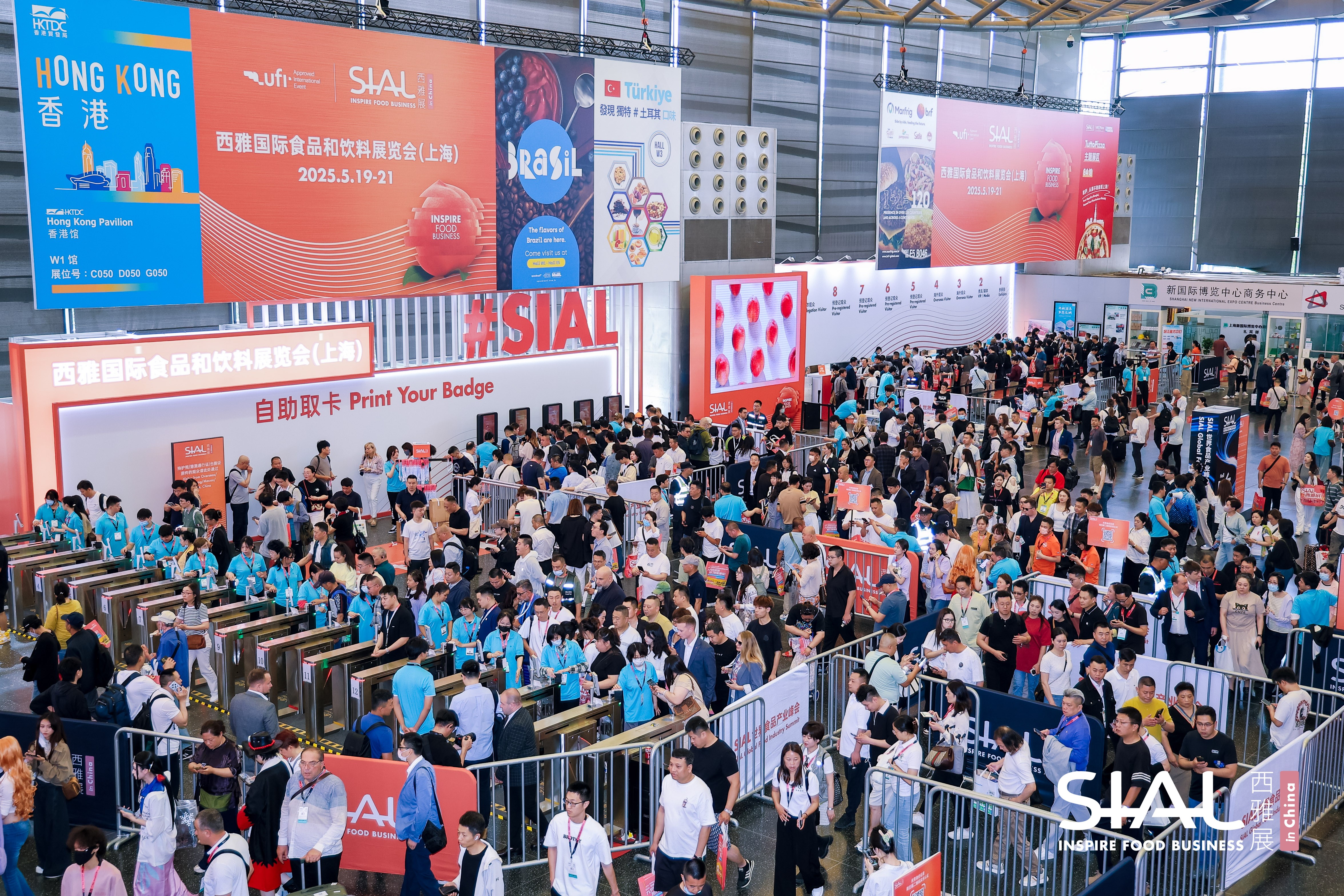
Extra virgin olive oil has moved well beyond the specialty shelf. For import managers and procurement teams, it is now a core category that sits at the intersection of health trends, culinary credibility, and margin performance. Yet the gap between a commodity-grade bulk shipment and a product that drives repeat purchases in retail or wins menu placement in a hotel kitchen is wide. Buyers who source through SIAL in China already know that Extra Virgin Olive Oil brands vary dramatically in stability, flavor profile, and channel fit. This guide breaks down how to match the right product to your specific business model.
What Sets Extra Virgin Olive Oil Apart in the B2B Market
Not every bottle labeled "extra virgin" performs the same way in a commercial setting. The category is regulated, but regulatory minimums do not guarantee consistency across harvest years or export batches. Understanding the technical markers that separate volume-friendly products from niche premium offerings is the first step in building a defensible assortment.
Quality Markers Buyers Should Verify
Procurement teams should look past front-label claims and build a short checklist of verifiable chemical and operational metrics. These three markers separate serious B2B suppliers from packagers who merely meet minimum regulatory thresholds, and they give buyers leverage during contract negotiations.
- Free fatty acidity must remain below 0.8 percent to qualify as extra virgin, yet leading B2B suppliers now consistently ship at 0.4 percent or lower. That tighter margin directly extends shelf life, which is critical in warm-climate distribution networks and long sea-freight routes.
- Cold extraction means the olives were pressed without heat exceeding 27°C. This temperature ceiling preserves polyphenols and antioxidants that begin to degrade as soon as thermal stress rises, protecting both nutritional value and flavor stability across storage.
- Lot-level traceability gives you audit ammunition when a retail partner or customs authority asks for proof of origin. A supplier who can document the exact mill, harvest date, and batch number for every shipment is demonstrating export-grade operational maturity.
Together, these three indicators form a practical filter that works across every origin and price tier. A supplier who excels across acidity control, cold-press discipline, and documentation transparency is far more likely to deliver consistent product across multiple harvest years and export batches.
Shelf Positioning and Consumer Perception
In retail, extra virgin olive oil behaves differently depending on the market. Buyers who understand these regional perception gaps can tailor their assortment and marketing messaging far more precisely than those who treat EVOO as a single global product.
- North American shoppers often treat EVOO as a health-product upgrade from standard vegetable oil, responding to certifications and front-of-pack claims rather than origin specificity.
- European buyers, especially in Mediterranean-adjacent regions, tend to evaluate by origin and cultivar, treating the purchase more like wine selection than commodity replacement.
- Asian markets are split: premium urban consumers seek PDO-protected oils for gifting and home cooking, while mass-market channels prioritize price-stable olive oil for cooking with neutral flavor and high smoke-point tolerance.
Knowing which perception mode your target retail channel operates in will determine whether you lead with origin story or with cost-per-liter.
Farchioni: Reliable Volume Supply for Retail and Foodservice
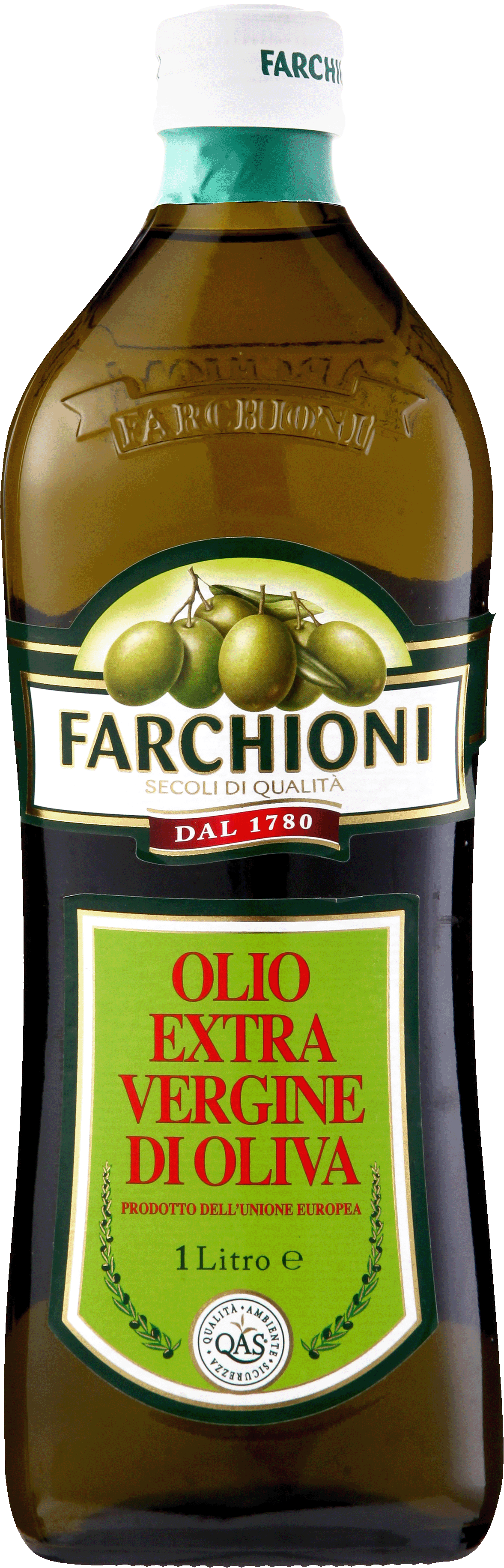
When procurement teams need a product that performs predictably across thousands of service instances, Italian producer Farchioni offers a pragmatic option. With a history spanning more than two centuries, the producer selects fresh olives for same-day pressing, yielding a pale golden oil that remains clear and bright in the bottle. Cold mechanical extraction preserves nutrients, and the finished product carries an acidity below 0.5 percent. For buyers evaluating Extra Virgin Olive Oil 1L, the appeal lies in that measured acidity and a flavor profile mild enough to work across Mediterranean, Asian, and fusion applications without dominating the dish. That neutrality is an asset in foodservice, where a single oil often serves salad stations, sauté lines, and finishing plates.
Packaging and Formats for Scale
Farchioni ships in formats designed for operational efficiency. The 1-liter bottle suits retail shelf sets and individual kitchen stations, while 3-liter tin containers reduce per-unit packaging cost for high-throughput restaurants. Large-volume foodservice clients can also access dedicated pallet configurations that simplify warehouse receiving. From a retail perspective, the 1-liter size hits a common impulse-buy threshold without requiring the deep pantry storage commitment of bulk formats, which improves turnover velocity in mainstream supermarkets.
Best Applications in Commercial Kitchens
The smoke point of Farchioni's classic line sits around 220°C, well above standard frying temperatures. That thermal headroom means kitchen managers can use one stock-keeping unit across multiple prep stations instead of segregating finishing oils from cooking oils. Chain restaurants and institutional caterers value that operational simplification because it reduces inventory complexity and minimizes waste from partially used specialty containers. When a single olive oil supplier can cover both high-heat cooking and light dressing duty, procurement contracts become easier to negotiate and manage.
Beyond olive oil, Farchioni has built out a broader food ecosystem that includes flour, wine, craft beer, and legumes. Buyers looking to consolidate vendor relationships across multiple pantry categories may find that portfolio breadth simplifies ordering and shipping logistics.
Mueloliva: Distinctive Character for Hotels and Gourmet Retail
On the opposite end of the spectrum, Spanish producer Mueloliva represents the premium tier. Operating from Andalusia for over eight decades, the company has accumulated more than 150 international awards across seventeen countries. For hotels, fine-dining restaurants, and gourmet retailers, that pedigree translates directly into menu credibility and shelf authority. Unlike volume-first producers, Mueloliva emphasizes early-harvest pressing and cultivar-specific expression, which means each batch carries more pronounced flavor characteristics.
Flavor Nuances That Elevate Fine Dining
Mueloliva's oils typically deliver a more assertive sensory profile than their Italian counterparts. Tasting notes often include green-olive fruitiness, herbaceous undertones, and a progressive bitterness and pepperiness that intensifies on the finish. In a fine-dining context, that complexity becomes a tool for the chef. A drizzle over grilled vegetables or raw seafood does not merely add fat; it contributes an aromatic layer that can anchor a dish's identity. The contrast with Farchioni is not about superiority—it is about purpose. Where one brand prioritizes seamless integration into diverse cuisines, the other offers a flavor statement that demands attention.
Positioning in Premium Distribution Channels
Hotels and gourmet retailers operate on a different replenishment rhythm than supermarket chains. Boutique properties may order smaller quantities more frequently to ensure guests receive recently bottled product. High-end food halls and specialty e-commerce platforms, meanwhile, use limited-production EVOO as a margin driver and a traffic builder. Buyers in these channels are less sensitive to per-liter cost and more focused on storytelling potential: harvest year, specific olive cultivar, and awards all become selling points that justify a price premium. Mueloliva's certification density and competition record supply that narrative material in abundance.
The company has also expanded beyond traditional olive oil into a wider vegetable oil portfolio that includes grapeseed oil, avocado oil, and sunflower oil. Buyers interested in diversifying their cooking oil assortment under a single premium brand umbrella can explore Mueloliva Avocado Oil as a complementary SKU with a higher smoke point and milder flavor for applications where olive intensity is not desired.
How to Match Olive Oil Products with Your Business Model
Product quality is only half the equation. The other half is structural fit: does this oil's price point, packaging, and flavor profile align with how your specific channel generates revenue? A misalignment here is expensive. Premium oil dumped into a high-volume discount chain will sit. Commodity oil placed in a luxury hotel pantry will undermine the property's positioning.
Retail Chains and Supermarket Requirements
Mass retail demands range coverage. A typical assortment needs an entry-level EVOO to capture price-comparison shoppers, a mid-tier option for regular buyers, and at least one premium or organic SKU to signal quality authority. Buyers should negotiate for promotional pack sizes—twin-packs or gift-box configurations—during peak seasons like Lunar New Year or year-end holidays. Barcode and label compliance vary by country, so confirm that your olive oil supplier can produce localized packaging or at least provide editable artwork without excessive lead time.
Hotel and Restaurant Procurement Priorities
Professional kitchens should separate back-of-house oil from front-of-house presentation oil. The former needs thermal stability and cost efficiency; the latter needs flavor distinction and bottle aesthetics. Hotels with in-house retail or concierge gift programs have a third category: miniature bottles that travel well and photograph attractively. Procurement teams that negotiate these three tiers simultaneously often secure better overall pricing than those who treat kitchen and retail oil as unrelated purchases.
Private Label and Wholesale Considerations
For importers and distributors looking to build their own brand, olive oil is a relatively accessible private-label category. Many established mills offer OEM services with reasonable minimum order quantities, especially if you commit to annual volume. The critical checkpoints are label compliance—nutrition panels, allergen declarations, and country-of-origin statements must meet destination-market law—and quality consistency across batches. Before signing a long-term contract, request three consecutive lots for sensory and chemical analysis. A supplier who passes that test is worth a multi-year agreement.
Key Criteria for Evaluating an Olive Oil Supplier
Once you have narrowed your product shortlist, the final decision rests on the supplier's operational reliability. Product quality can be tested in a single sample. Partnership quality only reveals itself over time and across multiple shipments.
Consistency, Traceability, and Documentation
Every batch should ship with a Certificate of Analysis covering acidity, peroxide value, and UV absorbance. Beyond the numbers, ask for harvest-date documentation and mill coordinates. If the supplier markets organic or PDO-certified products, verify that the certificates are current and issued by recognized bodies like ICEA or the EU's organic regulatory framework. Some buyers also request polyphenol content reports for antioxidant-focused retail positioning. A supplier who treats these documents as routine rather than exceptional is signaling mature export readiness.
Logistics and Import Readiness
Olive oil is not highly perishable in the same way seafood or dairy is, but it degrades with heat, light, and oxygen exposure. Confirm your supplier's storage conditions before shipment and their pallet stacking standards during transit. Dark glass or tin packaging helps, but container placement matters too. Experienced Extra Virgin Olive Oil brands will also guide you on import documentation—phytosanitary certificates, customs Harmonized System codes, and any tariff-exemption paperwork under regional trade agreements. Suppliers who have shipped into your target market before will know which paperwork triggers delays and which expedites clearance.
Conclusion
There is no single best extra virgin olive oil—only the one that fits your channel, your volume, and your customer's expectations. Farchioni offers the operational predictability that foodservice and mainstream retail demand, while Mueloliva supplies the sensory distinction and brand prestige that premium hotels and gourmet buyers seek. The most effective procurement strategy treats these not as competing options but as complementary tiers within a single portfolio, matched carefully to the revenue logic of each distribution channel.
FAQ
1. What is the difference between extra virgin and refined olive oil for cooking?
Extra virgin olive oil is extracted mechanically without heat or chemicals, preserving polyphenols and natural flavor compounds. Refined olive oil undergoes processing that strips away impurities and extends shelf life but also removes most antioxidants and aromatic character. For cooking, refined oil tolerates higher heat with less flavor degradation, yet it delivers none of the health halo or culinary complexity that drives premium purchasing.
2. How should retailers choose among extra virgin olive oil brands?
Retailers should anchor their assortment around three variables: price-band coverage, turnover velocity, and origin story strength. A single-origin PDO oil with award recognition may convert slowly but delivers higher margins and repeat loyalty from educated buyers. A blended EVOO at a sharper price point drives volume. The optimal mix depends on your store's traffic demographics and whether you compete primarily on price, selection, or curation authority.
3. What packaging formats work best for foodservice operations?
Tin containers of 3 to 5 liters minimize packaging cost per liter and stack efficiently in dry storage, though they can dent in transit. PET bottles reduce breakage risk for high-turnover back-of-house use. Glass projects quality for front-of-house table presentation but is heavier and more fragile. Some operations now use bag-in-box systems for cooking stations, though these are less common in olive oil than in wine. The right choice depends on storage space, handling roughness, and whether the container itself is visible to the end customer.
4. How can hotels differentiate their offerings with premium olive oil?
Hotels can deploy premium EVOO in three ways beyond the kitchen: breakfast buffets with small cruets labeled by harvest year and cultivar; in-room welcome amenities or minibar miniature bottles; and retail shops selling property-branded or co-branded oils as guest takeaways. Each touchpoint extends the hotel's culinary identity beyond the restaurant and creates a tangible memory that guests carry home. The key is consistency—if the in-room oil is exceptional but the restaurant uses a generic bulk alternative, the disconnect weakens the brand.
5. What certifications matter most when vetting an olive oil supplier?
The weight of each certification depends on your target market. Organic certification carries strong consumer recognition in North America and Northern Europe. PDO or PGI status resonates in Mediterranean markets and with culinary professionals globally. Fair-trade or carbon-neutral labels appeal to ethically minded retail channels but add cost that not every consumer segment will absorb. For entry into regulated markets like the EU or Japan, the most critical document is often the phytosanitary certificate and compliant nutrition labeling rather than a voluntary quality mark.
Is cold-pressed olive oil always the best choice for high-volume kitchens?
No. Cold pressing preserves flavor and antioxidants, but the resulting oil can be more reactive under sustained high heat because of its higher polyphenol and particle content. Some foodservice operations intentionally select filtered or lightly refined EVOO for deep-frying and prolonged sautéing because it degrades more slowly in the fryer. The ideal kitchen maintains two oils: a cold-pressed EVOO for finishing and low-heat applications, and a thermally stable option for high-output cooking stations. Judging oil quality by pressing temperature alone ignores the operational reality of commercial heat loads.



'/%3e%3cdefs%3e%3clinearGradient%20id='paint0_linear_1477_4631'%20x1='18.272'%20y1='0'%20x2='18.272'%20y2='35.3674'%20gradientUnits='userSpaceOnUse'%3e%3cstop%20stop-color='%23FF9F9F'/%3e%3cstop%20offset='1'%20stop-color='%23F15E5E'/%3e%3c/linearGradient%3e%3c/defs%3e%3c/svg%3e)
'/%3e%3cdefs%3e%3clinearGradient%20id='paint0_linear_1477_4633'%20x1='17.5'%20y1='0'%20x2='17.5'%20y2='35'%20gradientUnits='userSpaceOnUse'%3e%3cstop%20stop-color='%23E9C0EE'/%3e%3cstop%20offset='1'%20stop-color='%23CE57DC'/%3e%3c/linearGradient%3e%3c/defs%3e%3c/svg%3e)