
'%3e%3cpath%20d='M10%200C4.4772%200%200%204.4772%200%2010C0%2014.6896%203.2288%2018.6248%207.5844%2019.7056V13.056H5.5224V10H7.5844V8.6832C7.5844%205.2796%209.1248%203.702%2012.4664%203.702C13.1%203.702%2014.1932%203.8264%2014.6404%203.9504V6.7204C14.4044%206.6956%2013.9944%206.6832%2013.4852%206.6832C11.8456%206.6832%2011.212%207.3044%2011.212%208.9192V10H14.4784L13.9172%2013.056H11.212V19.9268C16.1636%2019.3288%2020.0004%2015.1128%2020.0004%2010C20%204.4772%2015.5228%200%2010%200Z'%20fill='black'/%3e%3c/g%3e%3cdefs%3e%3cclipPath%20id='clip0_601_545'%3e%3crect%20width='20'%20height='20'%20fill='white'/%3e%3c/clipPath%3e%3c/defs%3e%3c/svg%3e)

'%3e%3cpath%20d='M18.5195%200H1.47656C0.660156%200%200%200.644531%200%201.44141V18.5547C0%2019.3516%200.660156%2020%201.47656%2020H18.5195C19.3359%2020%2020%2019.3516%2020%2018.5586V1.44141C20%200.644531%2019.3359%200%2018.5195%200ZM5.93359%2017.043H2.96484V7.49609H5.93359V17.043ZM4.44922%206.19531C3.49609%206.19531%202.72656%205.42578%202.72656%204.47656C2.72656%203.52734%203.49609%202.75781%204.44922%202.75781C5.39844%202.75781%206.16797%203.52734%206.16797%204.47656C6.16797%205.42188%205.39844%206.19531%204.44922%206.19531ZM17.043%2017.043H14.0781V12.4023C14.0781%2011.2969%2014.0586%209.87109%2012.5352%209.87109C10.9922%209.87109%2010.7578%2011.0781%2010.7578%2012.3242V17.043H7.79688V7.49609H10.6406V8.80078H10.6797C11.0742%208.05078%2012.043%207.25781%2013.4844%207.25781C16.4883%207.25781%2017.043%209.23438%2017.043%2011.8047V17.043Z'%20fill='black'/%3e%3c/g%3e%3cdefs%3e%3cclipPath%20id='clip0_601_548'%3e%3crect%20width='20'%20height='20'%20fill='white'/%3e%3c/clipPath%3e%3c/defs%3e%3c/svg%3e)
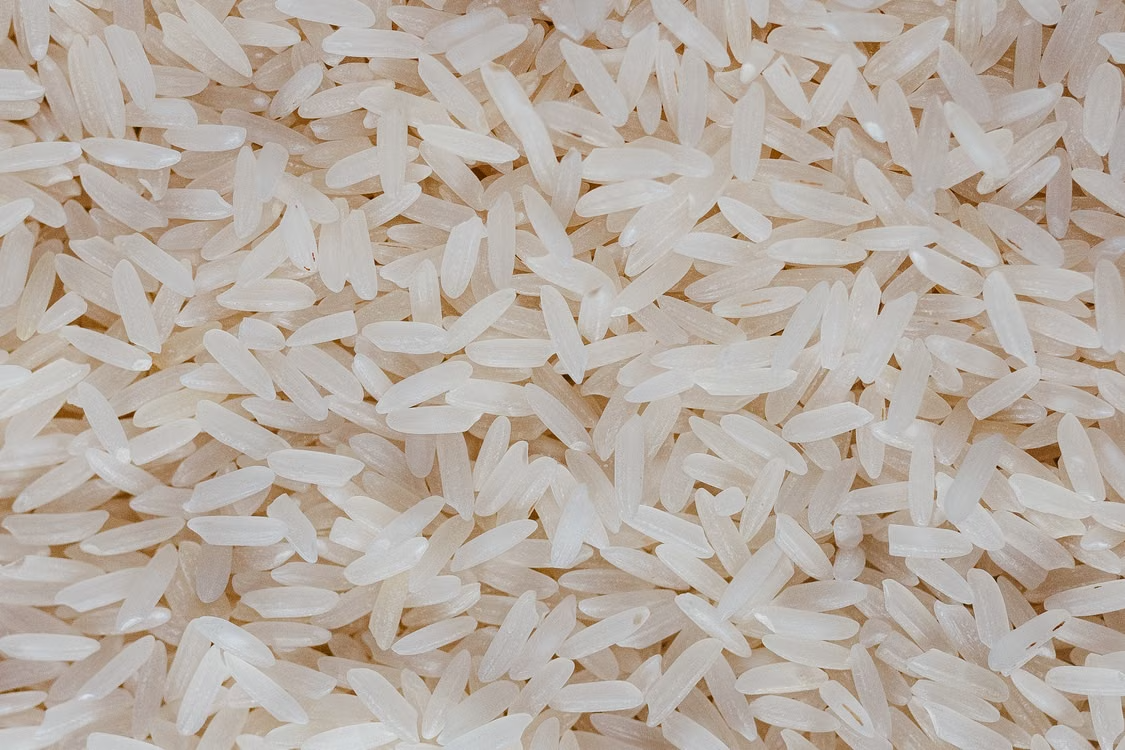
China is the world's largest rice producer and importer, importing over 2 million tonnes annually across long-grain, medium/short-grain, and broken rice categories. This guide covers the regulatory framework, import documentation, and compliance steps every rice supplier must understand to enter the Chinese market.
Core Information Overview
Item | Details |
|---|---|
Product Category | Long-grain rice; Medium/short-grain rice; Broken rice; Rice flour/grits |
Tariff Quota (2026) | 5.32 million tonnes total (2.66 Mt long-grain + 2.66 Mt medium/short-grain); 50% state-trading quota |
Primary Regulatory Agencies | |
Key Certifications & Approvals |
|
Core Standards |
|
Approved Rice Exporting Countries | Japan, India, Chinese Taipei, Myanmar, Laos, Thailand, Vietnam, Cambodia, Uruguay, Pakistan, South Korea, USA, Italy |
Last Updated | September 2026 |
Why China — Market Opportunities for Rice Suppliers
Import Demand and Market Size
China's rice import volume has rebounded significantly. USDA forecasts imports of 2.8 million tonnes for MY2025/26, up from 2.3 million tonnes in the previous year, driven by competitive international prices. More recent projections suggest imports could reach 4.3 million tonnes in 2026, positioning China as the world's second-largest rice importer. The pricing dynamics remain highly favorable for exporters.
Demand Categories — What China Is Buying
Polished rice imports have risen to account for 72% of total volume, replacing broken rice as the dominant category. Broken rice remains a significant category, used primarily for feed production and ethanol manufacturing, with strong price sensitivity. Long-grain polished rice serves the retail and foodservice sectors, with buyers actively diversifying origins. Medium/short-grain rice meets consumer preferences in northern China. Premium fragrant rice—including Thai jasmine and Indian/Pakistani basmati—targets high-income coastal urban markets and premium restaurant channels. Organic and specialty rice represents an emerging niche requiring additional certification.
Competitive Landscape Among Source Countries
Myanmar has leveraged geographic proximity and competitive pricing to become a leading rice supplier to China via overland routes. Vietnam offers mature supply chains and price competitiveness. India's resumption of broken rice exports re-entered a market segment highly aligned with Chinese feed demand. Pakistan recorded a remarkable 511% surge in rice exports to China in Q1 2026. Thailand maintains differentiation in premium fragrant rice.
Key Regulatory Requirements — What Every Rice Supplier Must Know
Tariff Quota System for Rice Imports into China
- Regulatory basis: Interim Measures for the Administration of Import Tariff Quotas for Agricultural Products (MOFCOM & NDRC Order No. 4 of 2003), as amended by MOFCOM Order No. 1 of 2019 and MOFCOM Order No. 2 of 2021.
- Core information: China applies an import tariff quota system to specified agricultural products, including rice. Under the system, the annual market access quantity is determined according to China's WTO commitments. Imports within the tariff quota are subject to the applicable in-quota tariff rate, while imports outside the quota are subject to the applicable out-of-quota tariff rate. For rice, the tariff quota is divided into state-trading and non-state-trading quotas, and the quota is a global quota. Rice import tariff quotas are allocated by the National Development and Reform Commission (NDRC) together with the Ministry of Commerce (MOFCOM).
- 2026 quota details: For 2026, the total grain import tariff quota is: wheat 9.636 million tonnes (90% state-trading quota); corn 7.2 million tonnes (60% state-trading quota); rice 5.32 million tonnes, of which 2.66 million tonnes is long-grain rice and 2.66 million tonnes is medium/short-grain rice, with 50% as state-trading quota.
- Supplier implication: China's tariff quota is allocated to eligible domestic final users rather than foreign rice suppliers. Under the quota system, state-trading quota must generally be imported through state-trading enterprises, while non-state-trading quota may be imported by enterprises with the relevant trading rights, including eligible final users. For a foreign rice supplier, this means the Chinese importing partner must have access to the relevant tariff quota arrangement for the shipment. If a final user cannot fulfill its allocated quota, the unused portion must be returned to the issuing authority by September 15 for possible redistribution.
Quarantine Access and Overseas Manufacturer Registration
- Regulatory basis: Measures for the Administration of Inspection and Quarantine of Grain Entering and Exiting the Country (GACC Order No. 280).
- Core information: The GACC implements a quarantine access system for inbound grain. For the first import of a certain type of grain from an exporting country or region, the official competent authority of the exporting country or region shall submit a written application to the GACC, providing technical information such as the species of pests, degree of damage, prevention and control conditions, and quality and safety control systems occurring during the planting, storage and transportation of such grain.
- Registration requirement: Under Decree 280, all overseas food manufacturers, processors, and storage facilities exporting rice to China must register with GACC. Edible grains, including rice, fall under the "Specified Foods" category requiring official recommendation from the competent authority in the exporting country. Registration is valid for 4 years. The registered enterprise list is published on the GACC website.
- Supplier implication: Before shipping rice to China, suppliers should confirm that their country has established the required quarantine access and that their production, processing, or storage facility is properly registered with GACC. Registration alone does not establish market access; suppliers must also ensure the shipment follows the applicable bilateral phytosanitary protocol and quarantine requirements.
Quarantine Import Permit and Pre-Import Approvals
The Chinese importer must obtain a Quarantine Import Permit before signing the trade contract. Application is made through the GACC platform. A Preliminary Quarantine Contact Sheet issued by the local customs office where the designated storage/processing facility is located is required before applying for the permit. Inbound grain must be transported to a GACC-designated storage and processing facility and enter through a designated supervision site.
Import Declaration Documents
Documents required for customs declaration (GACC Order No. 280):
- Plant quarantine certificate issued by the competent department of the exporting country or region;
- Certificate of origin;
- Trade contract, bill of lading, packing list, invoice and other trade vouchers;
- Other documents determined by bilateral agreements, memoranda and prescribed by the GACC."
Additional documents may include a quality certificate, GMO safety certificate (if applicable), and fumigation certificate.
Product Standards and Food Safety Compliance
Rice Quality Standard — GB/T 1354-2018
- Issuing authority: State Administration for Market Regulation (SAMR) and Standardization Administration of China (SAC)
- Official source: GB/T 1354-2018 (available for query and download on the National Public Service Platform for Standards Information)
- Core information:
- This standard specifies the terms and definitions, classification, quality requirements, test methods and inspection rules for milled rice, together with the requirements for packaging, labelling, storage and transport. It applies to edible commercial milled rice produced by milling paddy rice, brown rice or semi-finished rice.
- It sets the quality specifications: total broken kernels (≤15.0%, 20.0% and 30.0% for Grade 1, 2 and 3 indica rice; ≤10.0%, 15.0% and 20.0% for japonica rice; ≤15.0% and 25.0% for indica glutinous rice; ≤10.0% and 15.0% for japonica glutinous rice), of which small broken kernels ≤2.0%; milling degree (well milled or reasonably well milled); defective kernels ≤3.0%, 4.0% and 6.0% for Grades 1, 2 and 3; moisture ≤14.5% for indica rice and ≤15.5% for japonica rice; total extraneous matter ≤0.25%, of which inorganic matter ≤0.02%; yellow-coloured kernels ≤1.0%; varietal mixture ≤5.0%; and normal colour and odour."
- Supplier implication: GB/T 1354-2018 is a recommended standard, but it is the benchmark Chinese buyers and retailers use to grade milled rice, so treat the three grade levels for each rice type as your contract specification. Milling degree, broken-kernel content, moisture, extraneous matter and yellow-coloured kernels determine the grade; a lot that fails hygiene requirements is judged non-food.
Contaminant Limits — GB 2762-2022
- Issuing authority: National Health Commission (NHC) and State Administration for Market Regulation (SAMR)
- Official source: GB 2762-2022 (available for query and download on the National Food Safety Standard Data Retrieval Platform)
- Core information:
- This standard specifies the maximum levels for lead, cadmium, mercury, arsenic, tin, nickel, chromium, nitrite, nitrate, benzo[a]pyrene, N-nitrosodimethylamine, polychlorinated biphenyls and 3-chloro-1,2-propanediol in food. Whether or not a maximum level has been established, food producers and processors shall apply control measures to keep the contaminant content of food as low as possible.
- For paddy rice (calculated as brown rice), brown rice and milled rice (flour), the limits are: lead 0.2 mg/kg (cereals and their products), cadmium 0.2 mg/kg, total mercury 0.02 mg/kg, inorganic arsenic 0.2 mg/kg (0.35 mg/kg for paddy rice and brown rice), chromium 1.0 mg/kg (cereals) and benzo[a]pyrene 2.0 µg/kg.
- Supplier implication: Cadmium and inorganic arsenic are the contaminants that most often put rice out of specification. Both are tested on the edible portion — brown rice or milled rice, not paddy — so send representative samples to an accredited laboratory. Note that the cadmium limit is identical for paddy, brown rice and milled rice, so extra polishing alone will not remove a problem.
Pesticide Maximum Residue Limits — GB 2763-2026
- Issuing authority: National Health Commission (NHC), Ministry of Agriculture and Rural Affairs (MARA), and State Administration for Market Regulation (SAMR)
- Official source: GB 2763-2026 (available for query and download on the National Food Safety Standard Data Retrieval Platform)
- Core information:
- This document specifies 10,749 maximum residue limits (MRLs) for 585 pesticides, including 2,4-DB, in food, and applies to the foods to which those limits relate.
- Annex A (food categories and analytical portions) defines the scope of application and applies to this document only; where an MRL applies to a food category, it applies to all foods within that category unless otherwise specified.
- Annex B lists the pesticides exempt from the establishment of MRLs in food. Representative rice limits: paddy rice — chlorpyrifos 0.5 mg/kg, tricyclazole 5 mg/kg, glyphosate 0.1 mg/kg, quinclorac 1 mg/kg, buprofezin 0.3 mg/kg; brown rice — tricyclazole 0.5 mg/kg, imidacloprid 0.05 mg/kg; milled rice — isoprothiolane 1 mg/kg.
- Supplier implication: GB 2763-2026 replaced GB 2763-2021 and GB 2763.1-2022 on 1 March 2026, so refresh your specifications now. MRLs apply separately to paddy, brown rice and milled rice and the values differ; limits are permanent unless marked as temporary. Confirm the residue definition and testing method for each active substance with your laboratory.
Labeling Requirements — GB 7718-2025
- Issuing authority: National Health Commission (NHC) and State Administration for Market Regulation (SAMR)
- Official source: GB 7718-2025(available for query and download on the National Agricultural Food Standards Public Service Platform)
- Core information:
- This standard applies to the labelling of prepackaged foods supplied directly to consumers and of prepackaged foods not supplied directly to consumers.
- For prepackaged foods produced, processed and sold in China, the label shall state the food name, ingredient list, nutrition label, net content and specification (except for foods sold by measure), the name, address and contact details of the producer and/or operator, the production date and the shelf-life expiry date, storage conditions, the food production licence number, the product standard code, allergen information, and any other content required by laws, regulations and national food safety standards.
- The production date and the shelf-life expiry date shall be marked clearly in the order year, month, day…; date marking shall be clear, legible and not detached from the package or container, and shall not be affixed, overprinted or altered.
- Supplier implication: GB 7718-2025 keeps a fixed list of mandatory label items, but tightens date marking — it must be clear and must never be affixed, overprinted or altered — and makes allergen information mandatory when a listed allergen is used as an ingredient. Note that it applies from 16 March 2027; until then, the 2011 edition remains in force.
Step-by-Step Guide — Rice Export to China
- Step 1: Verify Country Eligibility. Confirm your country is on the GACC-approved list for rice export to China on the GACC Department of Animal and Plant Quarantine portal.
- Step 2: Complete GACC Overseas Manufacturer Registration. Register your production/processing facility with GACC through the CIFER system. Registration is valid for 4 years.
- Step 3: Establish Quarantine Protocol. For first-time imports from a new country, the exporting country's official authority must submit a written application to GACC and sign a bilateral phytosanitary protocol.
- Step 4: Partner with a Quota-Holding Chinese Importer. Your Chinese partner must hold a non-state-trading quota (requires 100,000+ tonne annual processing capacity) or access a state-trading quota.
- Step 5: Obtain the Quarantine Import Permit. The Chinese importer applies through the GACC platform before signing the trade contract, with a Preliminary Quarantine Contact Sheet.
- Step 6: Prepare Export Documentation. Ensure the Plant Quarantine Certificate, Certificate of Origin, trade contract, bill of lading, packing list, invoice, and fumigation certificate (if applicable) accompany each shipment.
- Step 7: Arrange Shipping to Designated Supervision Site. Inbound grain must enter through a GACC-designated supervision site. Verify the site list at GACC.
- Step 8: Customs Clearance and Inspection. Customs conducts document review, quarantine inspection, and laboratory testing for contaminants, pesticides, and quality parameters. Non-compliant shipments are destroyed or returned.
Conclusion
China remains a major and growing market for rice imports, offering real opportunities for qualified rice suppliers. Success in rice export to China depends less on price alone than on early preparation, reliable documentation, and strong local partnerships. Because regulations, quotas, and market demand change frequently, suppliers should verify official requirements before each shipment and build long-term relationships with experienced Chinese importers.
FAQs
1. Can a foreign rice supplier apply for China’s tariff quota directly?
Generally, foreign suppliers do not receive China’s rice tariff quota allocation directly. The quota is allocated to eligible domestic entities, so exporters typically need to work with a Chinese importing partner that has access to the relevant state-trading or non-state-trading quota arrangement for the shipment.
2. How long is GACC overseas manufacturer registration valid for?
GACC registration for overseas food manufacturers, processors, and storage facilities exporting rice to China is valid for four years. Suppliers should monitor the registration status of each facility and complete any required renewal or updating procedures before the registration expires to avoid disrupting future shipments.
3. When should the Chinese importer obtain the Quarantine Import Permit?
The Chinese importer should obtain the Quarantine Import Permit before signing the trade contract. The application also requires a Preliminary Quarantine Contact Sheet from the relevant local customs office. Suppliers should therefore coordinate with their importer early rather than treating the permit as a final pre-shipment formality.
4. Where must imported rice enter and be stored in China?
Inbound rice must enter through a designated supervision site and be transported to a GACC-designated storage and processing facility. Before shipment, suppliers should confirm these arrangements with their Chinese importer and ensure the planned logistics route is compatible with the designated facility and customs supervision requirements.
5. What happens if an imported rice shipment fails Chinese inspection?
If imported rice fails quarantine, food safety, pesticide residue, contaminant, or applicable quality requirements, the shipment may not be cleared for the Chinese market and may be returned or destroyed. Suppliers should therefore verify specifications and conduct appropriate pre-shipment testing rather than relying solely on inspection after arrival.


'/%3e%3cdefs%3e%3clinearGradient%20id='paint0_linear_1477_4631'%20x1='18.272'%20y1='0'%20x2='18.272'%20y2='35.3674'%20gradientUnits='userSpaceOnUse'%3e%3cstop%20stop-color='%23FF9F9F'/%3e%3cstop%20offset='1'%20stop-color='%23F15E5E'/%3e%3c/linearGradient%3e%3c/defs%3e%3c/svg%3e)
'/%3e%3cdefs%3e%3clinearGradient%20id='paint0_linear_1477_4633'%20x1='17.5'%20y1='0'%20x2='17.5'%20y2='35'%20gradientUnits='userSpaceOnUse'%3e%3cstop%20stop-color='%23E9C0EE'/%3e%3cstop%20offset='1'%20stop-color='%23CE57DC'/%3e%3c/linearGradient%3e%3c/defs%3e%3c/svg%3e)